
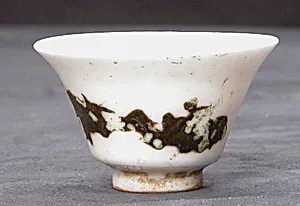
Cup
Unknown Artist
18th century
Medium
Stonepaste
Dimensions
H. 1 5/16 in. (3.3 cm) Diam. 2 1/8 in. (5.4 cm)
Classification
Ceramics
Department
Islamic Art
Museum
Metropolitan Museum of Art, New York, NY
Credit
Edward C. Moore Collection, Bequest of Edward C. Moore, 1891
Accession Number
91.1.99
Rights
Public Domain
Tags
Art Historical Context
This delicate stonepaste cup, crafted by an unknown artist in the18th century, exemplifies refined ceramic traditions of Islamic art. Measuring just 1 5/16 inches (3.3 cm) in height and 2 1/8 inches (5.4 cm) in diameter, its diminutive size suggests it may have served as a finial, scent cup, or vessel for precious oils and perfumes—items prized in Ottoman or Persian courts for their luxury and portability. Stonepaste, a hallmark of Islamic pottery innovation, combines ground quartz, clay, and glass frit to create a durable, porcelain-like white body ideal for intricate glazing and decoration. Developed centuries earlier as a response to China's unavailable true porcelain, this medium flourished into the 18th century, showcasing potters' mastery of translucent glazes and subtle forms. Though details of its surface adornment are not specified here, such cups often featured vibrant blues, turquoises, and gilding, reflecting the opulence of Islamic material culture. Now part of the Metropolitan Museum of Art's Islamic Art Department, this piece entered the collection through the bequest of Edward C. Moore in 1891, a pioneering collector of global decorative arts. It invites us to appreciate the everyday elegance of 18th-century Islamic craftsmanship, bridging utility and artistry in a single, exquisite object.