
Bowl
Unknown Artist
10th century
Medium
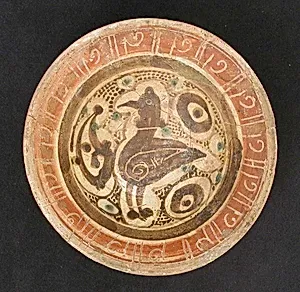
Earthenware; white slip, brown slip decoration, sgraffito decoration, glazed
Dimensions
H. 2 1/2 in. (6.4 cm) Diam. 6 5/8 in. (16.8 cm) Wt. 7.5 oz. (212.6 g)
Classification
Ceramics
Department
Islamic Art
Museum
Metropolitan Museum of Art, New York, NY
Credit
Gift of Mr. and Mrs. Lester Wolfe, 1965
Accession Number
65.270.5
Rights
Public Domain
Tags
Art Historical Context
This exquisite 10th-century earthen bowl from the Islamic world showcases the ingenuity of medieval ceramicists. Crafted with a white slip base and intricate brown slip decoration, the surface features sgraffito—a technique where artists scratched through the top layer to reveal contrasting colors beneath—before applying a glossy glaze for durability and shine. Delicate bird motifs, likely symbolizing grace or paradise gardens in Islamic iconography, enliven its shallow form, measuring just 2½ inches high and 6⅝ inches in diameter. In the vibrant tradition of Islamic ceramics, such bowls were everyday treasures, bridging utility and artistry during the Abbasid or Fatimid eras. Sgraffito emerged as a popular method in the 9th–10th centuries, especially in regions like Iraq and Persia, allowing affordable earthenware to rival pricier lusterware. These vessels highlight a cultural emphasis on geometric and natural motifs, evoking the natural world without figurative excess. A generous gift to the Metropolitan Museum of Art from Mr. and Mrs. Lester Wolfe in 1965, this bowl invites us to appreciate the anonymous maker's skill—proof that beauty thrives in humble materials.