
Dish
Unknown Artist
12th–13th century
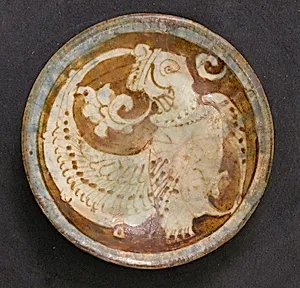
Medium
Stonepaste; luster-painted
Classification
Ceramics
Department
Islamic Art
Museum
Metropolitan Museum of Art, New York, NY
Credit
Gift of Dr. and Mrs. Lewis Balamuth, 1968
Accession Number
68.215.8
Rights
Public Domain
Tags
Art Historical Context
This exquisite stonepaste dish, crafted in the 12th–13th century, exemplifies the pinnacle of Islamic ceramic artistry during the medieval Islamic world. Housed in the Metropolitan Museum of Art's Department of Islamic Art, it was generously gifted by Dr. and Mrs. Lewis Baluth in 1968. Stonepaste, a composite body of quartz, clay, and frit, allowed artisans to create thin, translucent vessels that rivaled Chinese porcelain, which was highly prized but rare in the region. The dish's standout feature is its luster-p technique, where metallic oxides like copper and silver were applied over a glazed surface and fired in a low-oxygen kiln to produce a shimmering, iridescent glow. This luxurious method, perfected in centers like Iraq, Iran, and Syria, transformed everyday ceramics into opulent tableware for elite households. Delicate motifs of birds—evident in the tags—adorn its surface, reflecting the Islamic tradition of nature-inspired designs that symbolized beauty, harmony, and the wonders of creation. As a survivor from a vibrant era of cultural exchange along the Silk Roads, this dish highlights the technical innovation and aesthetic refinement of Islamic potters, inviting us to marvel at their enduring legacy in ceramics.