
Bowl
Unknown Artist
8th–9th century
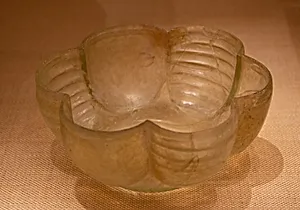
Medium
Glass, colorless with greenish tinge; mold blown, cut
Dimensions
H. 2 7/16 in. (6.2 cm) Diam. 5 7/16 in. (13.9 cm) Th. at rim of lobe 1/8 in. (.3 cm)
Classification
Glass
Department
Islamic Art
Museum
Metropolitan Museum of Art, New York, NY
Credit
Rogers Fund, 1970
Accession Number
1970.20
Rights
Public Domain
Art Historical Context
This delicate glass bowl, crafted by an unknown artist in the th–9th century exemplifies the refined artistry of Islamic glassmaking during the Abbasid era. Housed in the Metropolitan Museum of Art Department of Islamic Art (acquired through the Rogers Fund in 0), it measures just 2 7/16 inches high and 5 7/16 inches in diameter with thin walls—only 1/8 inch thick at the rim of its lobes—highlighting the exceptional thinness achieved by ancient artisans. Its colorless glass, subtly tinged with green, would have shimmered beautifully in lamplight, evoking the sophistication of medieval Islamic households. The bowl's creation involved sophisticated mold-blowing and cutting techniques, hallmarks of Islamic innovation in glass production centered in regions like Syria and Iraq. Molten glass was blown into a mold to form the lobed shape, then precisely cut to create faceted surfaces that catch and refract light, adding visual depth without added color or gilding. This method allowed for mass production of elegant, durable vessels while demonstrating masterful control over fragile material. In the context of the Islamic Golden Age, such bowls served both practical and aesthetic purposes—as tableware for fruits or confections—and symbolized cultural exchange along trade routes. They reflect a pinnacle of technical prowess, where everyday objects became miniature marvels of design, bridging utility and luxury in a thriving cosmopolitan world.