
Bowl
Unknown Artist
mid-12th century
Medium
Stonepaste; luster-painted
Dimensions
H. 6 11/16 in. (17 cm) Diam. 11 7/8 in. (30.2 cm)
Classification
Ceramics
Department
Islamic Art
Museum
Metropolitan Museum of Art, New York, NY
Credit
Gift of Habib Anavian, 1975
Accession Number
1975.40
Rights
Public Domain
Art Historical Context
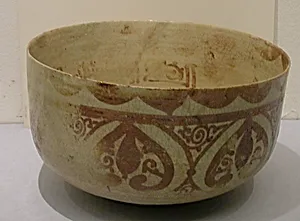
This elegant mid-12th-century bowl exemplifies the pinnacle of Islamic ceramic artistry during the Seljuq period.ed from stonepaste—a composite material of quartz, clay, and frit that mimicked the translucency of Chinese porcelain—it measures 6 11/16 inches high and 11 7/8 inches in diameter perfect for serving fruits, sweets, or beverages at elite gatherings. Donated to the Metropolitan Museum of Art in1975 by Habib An, it resides in the Islamic Art department, highlighting the sophistication of medieval Middle Eastern workshops, likely in Iran or Syria. The standout feature is its luster-painting technique, where a metallic solution of silver and copper oxides was brushed over a tin-opacified glaze and fired in a low-oxygen kiln. This created a shimmering, iridescent gold or coppery glow that catches the light like jewelry, symbolizing luxury and technical mastery. Revived from earlier Abbasid innovations, lusterware was reserved for high-status objects, blending functionality with opulence. In Islamic culture, such bowls bridged everyday life and artistry, often adorning royal tables or scholarly pursuits. Though the artist remains unknown, this piece reflects a golden age of experimentation, where potters pushed material boundaries to rival imported silks and metals, inviting us to appreciate the enduring allure of these radiant vessels.