
Bowl
Unknown Artist
11th–12th century
Medium
Stonepaste; glazed and slip-painted
Dimensions
Ht. 2 5/8 in. (6.7 cm) Diam. 6 3/4 in. (17.1 cm) Thickness. 1/4 in. (0.7 cm)
Classification
Ceramics
Department
Islamic Art
Museum
Metropolitan Museum of Art, New York, NY
Credit
Rogers Fund, 1939
Accession Number
39.89.2
Rights
Public Domain
Art Historical Context
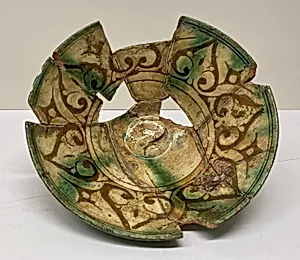
This elegant stonepaste bowl, crafted by an unknown artist in the th–12th century exemplifies the pinnacle of Islamic ceramic innovation during the Seljuk era. Measuring just 2⅝ inches high and 6¾ inches in diameter, its delicate form—only ¼ inch thick—highlights the technical mastery of potters in regions like Iran or Syria, where such vessels were both functional and finely artistic. Acquired through the Rogers Fund in 9, it now graces the Islamic Art department at the Metropolitan Museum of ArtStonepaste, a composite of quartz, clay, and frit (ground glass), was a groundbreaking medium developed by Islamic artisans to replicate the luminosity of coveted Chinese porcelain, which was unavailable in the West. The bowl's surface, glazed and adorned with slip-painting—a technique where pigmented slips (liquid clay mixtures) were applied before firing—created vibrant, durable designs under a glossy sheen. This method allowed for intricate patterns that reflected the era's aesthetic, blending utility with beauty. In Islamic culture, everyday objects like this bowl held profound significance, often serving as tableware while showcasing motifs inspired by nature, geometry, or script. Its survival speaks to the enduring legacy of medieval Islamic craftsmanship, bridging domestic life and artistic excellence for over a millennium.