
Bowl
Unknown Artist
12th century
Medium
Earthenware; carved and glazed
Dimensions
H. 2 5/16 in. (5.8 cm) Diam. 4 15/16 in. (12.5 cm) Wt. 6.4 oz. (181.5 g)
Classification
Ceramics
Department
Islamic Art
Museum
Metropolitan Museum of Art, New York, NY
Credit
Gift of Ralph D. Minasian, 2001
Accession Number
2001.438.2
Rights
Public Domain
Tags
Art Historical Context
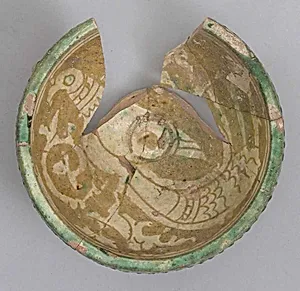
This delicate 12th-century earthen bowl, hailing from the Islamic world, exemplifies the exquisite ceramics produced during a golden age of artistic innovation. Measuring just 2 5/16 inches high and nearly 5 inches in diameter its modest size belies its refined craftsmanship. Now housed in the Metropolitan Museum Art's Department of Islamic Art, it was generously gifted by Ralph D. Minasian in 1. Crafted from earthenware, the bowl features intricate carving techniques—likely sgraffito, where designs are incised through a slip layer before glazing—revealing motifs of birds beneath a luminous glaze. This method, popular in medieval Islamic pottery centers like those in Iran or Central Asia, allowed artisans to create dynamic contrasts and vivid patterns on everyday objects. The birds, a recurring motif, evoke themes of nature and abundance, blending utility with poetic beauty. Such bowls were staples in households, used for serving food or ablutions, yet their artistic flair elevated them to treasures. They highlight how Islamic potters transformed humble clay into symbols of cultural sophistication, influencing global ceramics traditions. A closer look reveals the timeless elegance of this anonymous master's touch.