
Bowl
Unknown Artist
12th–13th century
Medium
Stonepaste; incised, glazed
Dimensions
H. 2 in. (5.1 cm) Diam. 5 1/8 in. (13 cm) Wt. 4.6 oz. (130.4 g)
Classification
Ceramics
Department
Islamic Art
Museum
Metropolitan Museum of Art, New York, NY
Credit
Rogers Fund, 1921
Accession Number
21.26.7
Rights
Public Domain
Art Historical Context
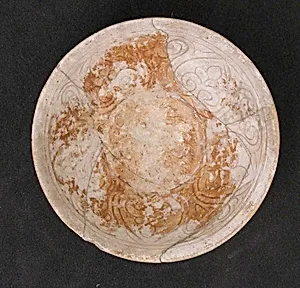
This elegant stonepaste bowl, crafted by an unknown artist in the th–13th century exemplifies the refined ceramics of the Islamic world. just 2 inches high and 5⅛ inches in diameter, modest size belies its sophisticated design, making it ideal for daily use in affluent households—perhaps for serving sweets, fruits, or beverages during communal meals. Stonepaste, also known as fritware, a groundbreaking Islamic innovation blending quartz, clay, and glass frit, fired to create a durable, porcelain-like body that could withstand glazing without cracking. Here, the surface features incised decoration—delicate motifs carved through a slip layer before glazing—revealing contrasting colors beneath the translucent turquoise or green glaze typical of the era. This sgraffito technique, popular in regions like Iran and Syria during the Seljuk period, allowed artisans to achieve intricate patterns with luminous depth, bridging utility and artistry. Housed in the Metropolitan Museum of Art's Islamic Art Department (acquired via the Rogers Fund in 1921), this bowl highlights the cultural flourishing of medieval Islamic pottery, where everyday objects became canvases for geometric and floral motifs symbolizing paradise. A testament to anonymous mastery, it invites us to appreciate the ingenuity behind the gleam.