
Bowl
Unknown Artist
19th century
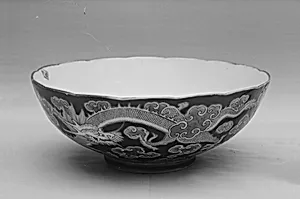
Medium
White porcelain decorated with iron red and blue enamel (Arita ware)
Dimensions
H. 3 1/4 in. (8.3 cm); Diam. 8 1/2 in. (21.6 cm)
Classification
Ceramics
Culture & Period
Japan · Edo (1615–1868) or Meiji period (1868–1912)
Department
Asian Art
Museum
Metropolitan Museum of Art, New York, NY
Credit
Gift of Charles Stewart Smith, 1893
Accession Number
93.3.509
Rights
Public Domain
Tags
Art Historical Context
This elegant 19th-century Japanese bowl, crafted in Arita ware, exemplifies the pinnacle of porcelain artistry from Saga Prefecture. Made of fine white porcelain and vibrantly decorated with iron-red and blue enamels, it measures just 3¼ inches high and 8½ inches in diameter, perfect for serving tea or sweets in a refined household. The dynamic dragon motifs, a hallmark tag of the piece, swirl across its surface, capturing the mythical creature's power and fluidity in bold, enamelled strokes. Arita ware, produced since the early 17th century during the Edo period (1615–1868), revolutionized Japanese ceramics by introducing high-fired porcelain techniques borrowed from China and Korea. Artisans applied underglaze cobalt blue before firing, then layered overglaze enamels like iron red for vivid, durable colors that withstood multiple kiln firings. Spanning the late Edo or early Meiji era (1868–1912), this bowl reflects Japan's export boom, with similar pieces coveted by European collectors for their exotic allure. Dragons in Japanese culture symbolize imperial strength, rain, and protection, often adorning elite wares. A generous gift from Charles Stewart Smith in 1893, this treasure now graces the Metropolitan Museum of Art's Asian Art collection, inviting visitors to appreciate the seamless blend of technical mastery and symbolic depth in everyday elegance.