
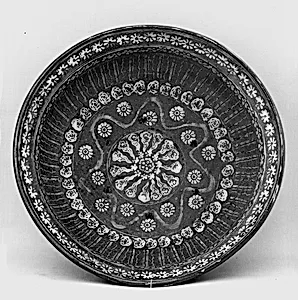
Bowl
Unknown Artist
18th century
Medium
Pottery with designs inlaid in the paste and covered with transparent glaze (Yatsushiro ware)
Dimensions
H. 3 1/2 in. (8.9 cm); Diam. 12 in. (30.5 cm)
Classification
Ceramics
Culture & Period
Japan · Edo period (1615–1868)
Department
Asian Art
Museum
Metropolitan Museum of Art, New York, NY
Credit
Edward C. Moore Collection, Bequest of Edward C. Moore, 1891
Accession Number
91.1.281
Rights
Public Domain
Tags
Art Historical Context
This elegant 18th-century bowl Japan's Edo period (1615–1868) exemplifies the refined artistry of Yatsush ware, a pottery tradition from Kumamoto prefecture Measuring just 3½ inches high and 12 inches in diameter, wide, shallow form was ideal for serving rice, soups, or tea, reflecting the period's emphasis on functional beauty in everyday ceramics. Delicate floral designs, inlaid directly into the clay paste (a technique called *zōgan* or inlay), are preserved under a transparent glaze, creating subtle contrasts that shimmer in the light. Yatsushiro potters mastered this labor-intensive inlay method, where pigments or clays were pressed into incised motifs before firing, producing durable yet intricate patterns less prone to wear than painted glazes. During the Edo era, a time of peace and prosperity, such wares bridged domestic use and elite tastes, often adorning merchant homes or tea gatherings. The floral motifs evoke nature's abundance, a common theme symbolizing harmony and renewal in Japanese culture. Now part of the Metropolitan Museum of Art's Asian Art collection, gifted through the Edward C. Moore bequest in 1891, this anonymous masterpiece invites visitors to appreciate the anonymous skill of Edo artisans—where simplicity meets sophistication.