
Bowl
Unknown Artist
late 12th–13th century
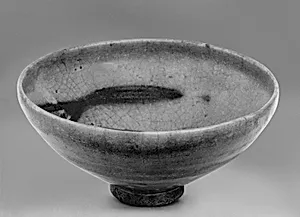
Medium
Stoneware with blue glaze ("splashed Jun" ware)
Dimensions
H. 4 3/8 in. (11.1 cm); Diam. 8 7/8 in. (22.5 cm)
Classification
Ceramics
Culture & Period
China · Jin (1115–1234)–Yuan (1271–1368) dynasty
Department
Asian Art
Museum
Metropolitan Museum of Art, New York, NY
Credit
H. O. Havemeyer Collection, Bequest of Mrs. H. O. Havemeyer, 1929
Accession Number
29.100.208
Rights
Public Domain
Art Historical Context
This elegant stoneware bowl, crafted in China during the late 12th to 13th century amid the turbulent transition from the Jin (111–1234) to the Yuan (1271–8) dynasties, the artistry of "splashed Jun" ware. Produced in the kilns of Henan province, Jun ceramics were renowned for their experimental glazes, fired at high temperatures to create unpredictable, mesmerizing effects. Here, a rich blue glaze splashes across the surface, often mingling with subtle purple or lavender hues, evoking the drama of natural landscapes or cosmic phenomena prized in Chinese aesthetics. Measuring just 4⅜ inches high and 8⅞ inches in diameter, this wide-mouthed bowl was likely used for daily rituals like tea drinking or offerings, blending functionality with imperial-level sophistication. The stoneware body's durability and the glaze's distinctive crackle—formed as it cooled—highlight innovative techniques that pushed ceramic boundaries, influencing later porcelain traditions. Though the artist remains unknown, such wares were valued by collectors for their individuality; no two pieces are alike due to the kiln's alchemical magic. Now part of the Metropolitan Museum of Art's Asian Art collection, gifted through the H.O. Havemeyer bequest in 1929, this bowl invites us to appreciate the Jin-Yuan era's resilience and creativity amid dynastic change.