
Water dropper
Unknown Artist
12th–13th century
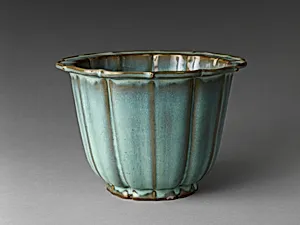
Medium
Stoneware with splashed blue glaze (Jun ware)
Dimensions
H. 6 5/8 in. (16.8 cm); Diam. 9 1/2 in. (24.1 cm)
Classification
Ceramics
Culture & Period
China · Jin dynasty (1115–1234)
Department
Asian Art
Museum
Metropolitan Museum of Art, New York, NY
Credit
Gift of Mrs. Samuel T. Peters, 1926
Accession Number
26.292.1
Rights
Public Domain
Art Historical Context
This exquisite water dropper, crafted in China's Jin dynasty (11151234), exemplifies the artistry of Jun ware ceramics from the 12th–13th. Standing at 6⅝ inches high and 9½ inches in diameter, this stoneware vessel was designed for scholars' studios, where it dispensed water drop by drop onto inkstones for calligraphy and painting—a nod to the refined literati culture of the era. Produced in kilns near Yu Xian in Henan province, Jun ware pieces like this were prized for their unassuming forms that served everyday scholarly rituals amid political upheaval. The defining feature is its splashed blue glaze, a hallmark of Jun ware achieved through innovative high-temperature firing techniques. Iron-rich glazes were layered and fired in wood-fueled kilns, creating unpredictable purples, blues, and milky whites that "splashed" across the surface like liquid sky. This serendipitous effect, born from the Song-Jin transition's experimental kilns, elevated humble stoneware to imperial status, symbolizing nature's harmony and the fleeting beauty of glaze flows. Housed in the Metropolitan Museum of Art's Asian Art Department (gift of Mrs. Samuel T. Peters, 1926), this anonymous masterpiece invites us to appreciate the Jin dynasty's ceramic legacy—bridging utility and poetry in a turbulent time.