
Bowl
Unknown Artist
1400–1450
Medium
Tin-glazed earthenware
Dimensions
Overall: 8 1/16 x 19 5/16 in. (20.5 x 49 cm)
Classification
Ceramics
Culture
Spanish
Department
Medieval Art
Museum
Metropolitan Museum of Art, New York, NY
Credit
Gift of Henry G. Marquand, 1894
Accession Number
94.4.361
Rights
Public Domain
Tags
Art Historical Context
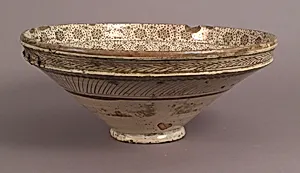
This exquisite tin-glazed earthenware bowl crafted in Spain between 1400 and 1450 exemplifies the vibrant ceramics of late medieval Iberia. Measuring an impressive 8 /16 x 19 5/16 inches (20.5 x 49 cm), its wide, shallow form suggests it was designed for communal serving, perhaps of fruits or confections during feasts. Adorned with floral motifs—evident from its decorative tags—the bowl bursts with the colorful patterns typical of the era, bringing a touch of nature's splendor to everyday life. The medium of tin-glazed earthenware, known as *majolica* or Hispano-Moresque ware, was a technological marvel introduced through Islamic influences in Spain. Artisans applied a tin-oxide opacifier to create a smooth, white surface ideal for bold painted designs in blues, greens, and yellows, fired at low temperatures to preserve vivid hues. This technique elevated humble clay into luxury objects, bridging medieval craftsmanship with emerging Renaissance aesthetics. Housed in the Metropolitan Museum of Art's Medieval Art Department since 1894, thanks to a gift from Henry G. Marquand, this anonymous masterpiece highlights Spain's rich ceramic heritage. It invites us to imagine medieval tables alive with color and conversation, a testament to the enduring beauty of functional art.