
Bowl
1830
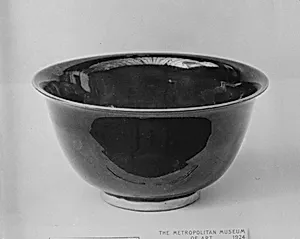
Medium
Faience(?) covered with rich green glaze, craquelé (Kyoto ware)
Dimensions
H. 3 1/16 in. (7.8 cm); Diam. 5 3/4 in. (14.6 cm)
Classification
Ceramics
Culture & Period
Japan · Edo period (1615–1868)
Department
Asian Art
Museum
Metropolitan Museum of Art, New York, NY
Credit
Gift of Mrs. V. Everit Macy, 1923
Accession Number
23.225.380
Rights
Public Domain
Art Historical Context
This exquisite bowl, crafted by Eir Hozen in 1830 during Japan's Edo period (1615–1868), exemplifies the refined artistry of Kyoto ware. Measuring just 3 1/16 inches high 5 3/4 inches in diameter, its petite form was ideal for intimate rituals like the tea ceremony, a cornerstone of Japanese culture emphasizing harmony and simplicity. Eiraku Hozen, from the esteemed Eiraku family of potters, specialized in reviving ancient Chinese celadon techniques, producing wares prized by samurai and merchants alike in Kyoto's vibrant ceramic scene. The bowl's medium—likely faience, a tin-glazed earthenware—shimmers under a rich green glaze with deliberate craquelé, or fine crackling, that adds texture and depth. This crackle effect, achieved through precise firing and glaze recipes, mimics the prized celadons of Song dynasty China while showcasing Edo-era innovation. Kyoto ware, known for its elegance over mass production, symbolized cultural sophistication amid Japan's peaceful isolation under the Tokugawa shogunate. Today, this gift to the Metropolitan Museum of Art in 1923 invites visitors to appreciate how everyday objects became vessels of beauty, bridging utility and artistry in feudal Japan.
About the Artist
Eiraku Hozen · 1795–1854
Eiraku Hozen (1795–1854) was a celebrated Japanese ceramic artist and the sixteenth-generation head of the Nishimura family, a Kyoto dynasty of potters whose work was closely associated with the tastes of the imperial court and the refined aesthetic culture of the ancient capital. Operating under the artistic name Eiraku — a name that would become synonymous with a particular style of elegant, tec...