
Bowl
Unknown Artist
4th–7th century
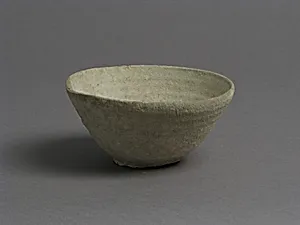
Medium
Earthenware
Dimensions
Overall: 2 1/16 x 4 3/16 in. (5.2 x 10.7 cm)
Classification
Ceramics
Culture
Coptic
Department
Medieval Art
Museum
Metropolitan Museum of Art, New York, NY
Credit
Rogers Fund, 1925
Accession Number
25.10.20.250
Rights
Public Domain
Tags
Art Historical Context
This unassuming earthenware bowl, crafted by an unknown artist in Coptic Egypt between the 4th and 7th centuries, offers a glimpse into the daily life of early Christian communities in the Nile Valley. Measuring just over 2 inches high and 4 inches wide, its modest scale suggests it was designed for practical use—perhaps holding spices, oils, or small portions of food in a household setting. Earthenware, a low-fired clay common in ancient Egypt, was durable yet accessible, reflecting the resourcefulness of Coptic artisans who adapted local traditions amid the region's transition from pharaonic to Christian eras. Coptic culture emerged as Christianity took root in Egypt under Roman and Byzantine rule, blending Egyptian, Greek, and Mediterranean influences. Ceramics like this bowl were everyday staples, often simply formed on a wheel and occasionally incised or slipped for subtle decoration, though this example highlights the purity of form over ornament. Its presence in the Medieval Art department underscores its role in the early medieval world, bridging antiquity and the Middle Ages. Acquired through the Rogers Fund in 1925, this bowl from the Metropolitan Museum of Art invites us to appreciate the quiet artistry of anonymous makers. In a time of profound religious and cultural change, such objects grounded Coptic life, embodying resilience and continuity.