
Bowl
Unknown Artist
4th–7th century
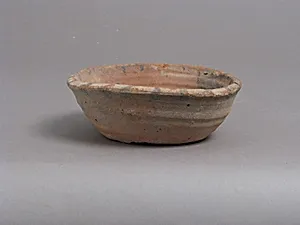
Medium
Earthenware
Dimensions
Overall: 1 3/4 x 4 15/16 in. (4.4 x 12.5 cm)
Classification
Ceramics
Culture
Coptic
Department
Medieval Art
Museum
Metropolitan Museum of Art, New York, NY
Credit
Rogers Fund, 1925
Accession Number
25.10.20.326
Rights
Public Domain
Tags
Art Historical Context
This delicate earthenware bowl, crafted by an unknown Coptic artist between the 4th and 7th centuries, offers a glimpse into everyday life in early Christian Egypt. Measuring just 1 3/4 x 4 15/16 inches, its modest size suggests it was used for serving or storing food, reflecting the practical artistry of Coptic potters during a time of cultural transition. Coptic culture emerged in Egypt following the spread of Christianity, blending ancient Egyptian traditions with Byzantine influences. Earthenware like this—fired low-temperature clay—was a staple medium, valued for its affordability and durability. Though simple in form, such vessels often featured incised designs or motifs symbolizing faith and fertility, highlighting the Copts' skill in transforming humble materials into objects of subtle beauty. Housed in the Metropolitan Museum of Art's Medieval Art department (acquired via the Rogers Fund in 1925), this bowl underscores the richness of Coptic ceramics in preserving domestic history. It invites us to appreciate how ordinary items from late antiquity illuminate the spiritual and social world of a vibrant Christian community.