
Bowl
Unknown Artist
13th–14th century
Medium
Opaque blue glass
Dimensions
H. 2 15/16 in. (7.5 cm); Diam. 6 5/16 in. (16 cm); Diam. of foot 1 1/2 in. (3.8 cm)
Classification
Glass
Culture
China
Department
Asian Art
Museum
Metropolitan Museum of Art, New York, NY
Credit
Purchase, Edward S. Harkness Gift, 1926
Accession Number
26.7.1273
Rights
Public Domain
Art Historical Context
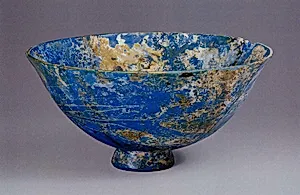
This exquisite opaque blue glass bowl, crafted China during the 13–14th century, a rare glimpse into a luxurious material uncommon in traditional Chinese ceramics-dominated culture. Standing just under 3 inches tall with a 6-inch diameter and a footed base, its vibrant, milky blue hue evokes the depth of lapis lazuli, a prized stone in Asian art. Acquired by the Metropolitan Museum of Art in1926 through the Edward S. Harkness, it resides in the Asian Art Department a testament to early glassworking prowess. During the Yuan dynasty (1271–1368), which aligns with this bowl's era, glass production flourished in China under Mongol rule, influenced by Silk Road exchanges with West Asia. Opaque glass like this was achieved through sophisticated techniques, such as adding metallic oxides for color and opacity, creating a gem-like translucency prized by elites. Unlike widespread porcelain, glass vessels symbolized exotic wealth and cross-cultural innovation. Today, this unadorned yet elegant bowl highlights China's brief but brilliant glassmaking tradition, bridging Eastern and Islamic aesthetics in a compact, functional form perfect for holding precious liquids or confections.