
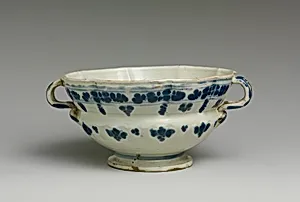
Bowl
Unknown Artist
ca. 1750–1800
Medium
Tin-glazed earthenware
Dimensions
Diam. 3 5/8 in. (9.2 cm)
Classification
Bowl
Culture
Mexican
Department
The American Wing
Museum
Metropolitan Museum of Art, New York, NY
Credit
Gift of Mrs. Robert W. de Forest, 1911
Accession Number
11.87.22
Rights
Public Domain
Art Historical Context
This delicate tin-glazed earthenware bowl, crafted in Mexico around 1750–1800, exemplifies the vibrant pottery traditions of the late colonial era in New Spain. Measuring just 3 5/8 inches in diameter, its petite size suggests it was likely used for individual servings of food or drink in everyday households, blending functionality with artistic flair. The medium of tin-glazed earthenware—known as maiolica in Spanish-influenced regions—involves coating fired clay with a tin-oxide glaze that creates an opaque, brilliant white surface ideal for bold painted designs. Though the specific motifs on this example aren't detailed, the technique highlights Mexico's mastery of this process, rooted in Islamic and Renaissance European influences brought by Spanish colonizers. It reflects the fusion of indigenous craftsmanship with imported styles, producing durable yet decorative tableware prized across the Americas. Housed in The Metropolitan Museum of Art's American Wing and gifted by Mrs. Robert W. de Forest in 1911, this anonymous work underscores the rich cultural exchanges of the colonial period. It invites visitors to appreciate how humble objects like this bowl carried artistic innovation into daily life, bridging Mexican heritage with broader New World narratives.