
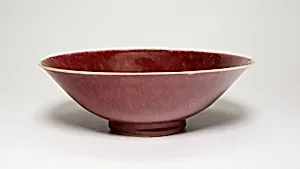
Bowl
Qing dynasty (1644–1911), Kangxi period (1662–1722)
Medium
Porcelain
Dimensions
7.7 × 22.5 cm (3 × 8 7/8 in.); Diam.: 22.5 cm (8 7/8 in.)
Classification
porcelain
Department
Arts of Asia
Museum
Art Institute of Chicago
Accession Number
42203
Rights
Public Domain
Art Historical Context
Nestled in the Arts of Asia department at the Art Institute of Chicago this elegant porcelain bowl hails from China's Qing dynasty during the Kangxi period (2–1722), a golden age of imperial artistry. Measuring 7.7 × 22.5 cm with an 8 7/8-inch diameter its modest size belies the sophistication of its creation at the famed Jingdezhen kilns, where potters crafted vessels for both courtly use and global export. Porcelain, China's "white gold," reached unparalleled refinement under Emperor Kangxi, blending translucent kaolin clay with high-temperature firing for a durable, luminous finish. Though the artist remains unknown, this bowl exemplifies the era's technical mastery—precise wheel-throwing and glazing techniques that produced watertight, thinly potted forms ideal for tea ceremonies, dining, or display. Exported worldwide via maritime trade, such pieces symbolized luxury and cultural prestige, influencing European ceramics like Meissen ware. Today, this bowl invites us to appreciate the Qing's blend of utility and beauty, a testament to an empire's innovative spirit that continues to captivate collectors and visitors alike.
About the Artist
Unknown
The artist designated as "Unknown" in our virtual museum's collection exemplifies a poignant chapter in art history: creators whose identities have faded into obscurity despite the enduring power of their work. With only one known artwork attributed to them in our holdings, this figure represents countless anonymous hands that shaped visual culture across centuries. Museums worldwide, including th...