
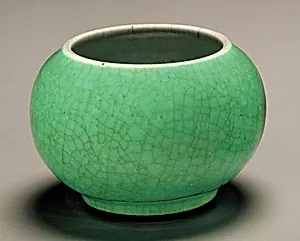
Bowl
late 18th/early 19th century
Medium
porcelain with apple-green glaze
Dimensions
overall: 7.3 x 10.9 cm (2 7/8 x 4 5/16 in.)
Classification
Decorative Art
Department
CSD
Museum
National Gallery of Art, Washington, D.C.
Credit
Widener Collection
Accession Number
1942.9.545
Rights
Public Domain
Art Historical Context
This delicate porcelain bowl from China's Qing Dynasty (late 18th to early 19th century) exemplifies the era's mastery of monochrome glazes. Measuring just 7.3 x 10.9 cm, its apple-green enamel glows with a soft, translucent vibrancy, evoking the ripeness of fresh fruit—a nod to the poetic refinement prized in imperial Chinese aesthetics. Produced likely at the famed Jingdezhen kilns, the "porcelain capital," such vessels were everyday luxuries for the elite, used for tea ceremonies or displaying confections. The apple-green glaze, a celadon variant perfected during the Qing, required precise control of copper and iron oxides in the formula, fired at high temperatures (around 1,300°C) to achieve its signature hue without blemishes. This technique highlighted the dynasty's technical innovation, blending Song Dynasty traditions with imperial experimentation under emperors like Qianlong. Part of the Widener Collection at the National Gallery of Art, it reflects how decorative arts bridged utility and artistry. In Qing culture, these bowls symbolized harmony and prosperity, their unadorned elegance embodying Confucian ideals of understated beauty. A small treasure that invites quiet contemplation, it transports us to a world where even a humble object shone with imperial grace.
About the Artist
Chinese Qing Dynasty · 1644–present
"Chinese Qing Dynasty" serves as a collective attribution in museum collections for anonymous artworks produced during China's Qing era (1644–1912), encompassing the works of imperial workshop artisans rather than a single individual. These creators operated primarily from the imperial kilns at Jingdezhen, where potters, painters, and enamellers collaborated under strict court oversight, though sp...