
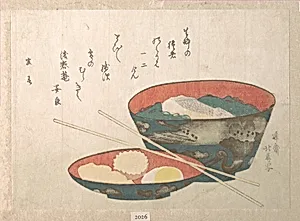
Bowl of New Year Food
probably 1808
Medium
Woodblock print (surimono); ink and color on paper
Dimensions
5 1/8 x 7 3/16 in. (13 x 18.3 cm)
Classification
Prints
Culture & Period
Japan · Edo period (1615–1868)
Department
Asian Art
Museum
Metropolitan Museum of Art, New York, NY
Credit
H. O. Havemeyer Collection, Bequest of Mrs. H. O. Havemeyer, 1929
Accession Number
JP2026
Rights
Public Domain
Tags
Art Historical Context
Delight in the festive spirit of Japan's Edo period (1615–1868) with *Bowl of New Year Food*, a woodblock print (surono) by Teisai Hokuba, likely created around 1808 Hokuba, a skilled ukiyo-e artist follower of the renowned Katsushika Hokusai, captures a modest yet celebratory scene featuring a bowl brimming with traditional New Year foods—symbolizing prosperity and good fortune—and playful birds perched nearby. These intimate prints, often commissioned for private New Year greetings, were luxuriously produced with vibrant inks, subtle colors, and sometimes metallic accents, making them treasured keepsakes among the literati. Measuring just 5 1/8 x 7 3/16 inches, this petite work exemplifies surimono's refined artistry: precise carving on woodblocks allowed for rich layering of color and fine detail, evoking abundance in a compact format. Housed in the Metropolitan Museum of Art's Asian Art collection (H. O. Havemeyer Collection, 1929), it reflects Edo Japan's cultural emphasis on seasonal rituals, where osechi dishes like sweet black beans and chestnuts promised health and harmony for the year ahead. Birds add a whimsical touch, perhaps symbolizing joy or messengers of spring, inviting viewers to savor the print's warmth and whimsy during museum visits.
About the Artist
Teisai Hokuba · 1771–1844
Teisai Hokuba (1771–1844) was a Japanese artist of the Edo period who worked in the tradition of ukiyo-e, the celebrated school of woodblock prints and paintings that depicted the floating world of urban pleasure, theater, landscape, and daily life. A devoted pupil of Katsushika Hokusai — one of the towering figures in the history of Japanese art — Hokuba adopted the prefix of his master's name as...