
Bowl (one of a pair)
Unknown Artist
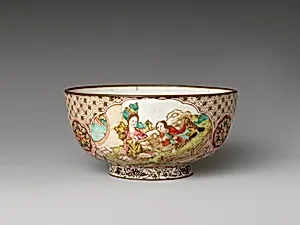
Medium
Painted enamel
Dimensions
Diam. 4 3/4 in. (12.1 cm)
Classification
Enamels
Culture & Period
China · Qing dynasty (1644–1911), late Qianlong period (1736–95)
Department
Asian Art
Museum
Metropolitan Museum of Art, New York, NY
Credit
Bequest of Mary Clark Thompson, 1923
Accession Number
24.80.402
Rights
Public Domain
Art Historical Context
This exquisite painted enamel bowl, one of matching pair, hails from China's Qing dynasty during the late Qianlong period1736–95), a golden era of imperial artistry under the Qianlong Emperor. Crafted in the Asian tradition, its modest diameter of 4 3/4 inches (12.1 cm) suggests was likely a delicate decorative vessel or holder for small treasures, embodying the refined luxury of palace workshops. Painted enamel, a sophisticated medium blending vitreous pigments fired onto a metal base, showcases the technical virtuosity of Qing enamellers. Techniques like cloisonné or painted overglaze allowed for vibrant, jewel-like colors and intricate designs, often drawing from floral motifs or auspicious symbols—hallmarks of imperial taste. Introduced via European influences in the 17th century, enamelwork flourished in China, symbolizing wealth and cultural fusion. Bequeathed to the Metropolitan Museum of Art in 1923 by Mary Clark Thompson, this bowl highlights the era's artistic pinnacle, where everyday objects became canvases for opulence. Visitors will appreciate its subtle gleam, a window into Qianlong China's masterful blend of innovation and tradition.