
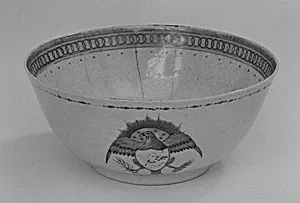
Bowl (part of a service)
Unknown Artist
late 18th–early 19th century
Medium
Hard-paste porcelain
Dimensions
Diameter: 5 5/16 in. (13.5 cm)
Classification
Ceramics-Porcelain-Export
Culture
Chinese, for American market
Department
European Sculpture and Decorative Arts
Museum
Metropolitan Museum of Art, New York, NY
Credit
Helena Woolworth McCann Collection, Gift of Winfield Foundation, 1951
Accession Number
51.86.158
Rights
Public Domain
Tags
Art Historical Context
This delicate hard-paste porcelain bowl, of a larger service, hails from China in the late 18th early 19th century crafted specifically for the American market. Measuring just 5 5/16 inches (13.5 cm) in diameter, it exemplifies the exquisite export porcelain that flooded Western households during the height of the China Trade era. Adorned with bird motifs popular decorative theme symbolizing grace and vitality in Chinese art—the bowl would have been one of many pieces in an elegant table service, used for everything from soups to desserts. Hard-paste porcelain, made from kaolin clay and fired at extremely high temperatures, represents a pinnacle of Chinese ceramic innovation. This true porcelain is prized for its durability, translucency, and fine white body, allowing intricate designs like the birds to shine through underglaze blue or overglaze enamels. Produced in bustling kilns near Canton (Guangzhou), these wares were customized for export, blending Eastern craftsmanship with Western tastes and facilitating global trade. Now housed in the Metropolitan Museum of Art's European Sculpture and Decorative Arts Department, thanks to the Helena Woolworth McCann Collection, this bowl offers a tangible link to early American consumerism and cross-cultural exchange. It reminds us how everyday objects carried artistic mastery across oceans, enriching colonial and early republican homes.