
Cup and Saucer
Unknown Artist
1800–1815
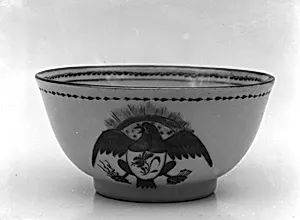
Medium
Porcelain
Dimensions
Cup: H. 1 5/8 in. (4.1 cm); Diam. 3 1/2 in. (8.9 cm) Saucer: H. 1 1/2 in. (3.8 cm); Diam. 5 5/8 in. (14.3 cm)
Classification
Cup and saucer
Culture
Chinese
Department
The American Wing
Museum
Metropolitan Museum of Art, New York, NY
Credit
Gift of Mrs. J. Insley Blair, 1942
Accession Number
42.149.18, .28
Rights
Public Domain
Tags
Art Historical Context
This elegant cup and saucer, crafted in China between 1800 and 1815, exemplifies the height of the porcelain export trade that flourished during the early 19th century. Made from fine porcelain—renowned for its translucency and durability—the set features subtle dimensions ideal for genteel tea service: the cup stands just 1⅝ inches tall with a 3½-inch diameter, paired with a 5⅝-inch saucer. Delicate eagle motifs, hinted at in its tags, adorn the surface, likely painted in underglaze blue or overglaze enamels, a hallmark technique of Chinese potters catering to Western tastes. Produced during America's formative post-Revolutionary years, this piece reflects the burgeoning trans-Pacific trade via Canton, where Chinese artisans customized porcelain for U.S. consumers eager to display national pride. The eagle, a potent symbol of American freedom adopted from the Great Seal in 1782, underscores its patriotic appeal, bridging Eastern craftsmanship with New World identity. Housed in The Metropolitan Museum of Art's American Wing, it highlights how imported luxuries shaped everyday elite life in the young republic. Gifted to the Met in 1942 by Mrs. J. Insley Blair, this anonymous artist's work endures as a tangible link to global exchange and cultural fusion, inviting us to sip history from its graceful form.