
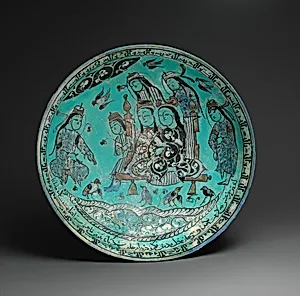
Bowl with a Majlis Scene by a Pond
dated A.H. 582/ 1186 CE
Medium
Stonepaste; glazed in opaque turquoise, polychrome in-glaze- and overglaze- painted
Dimensions
H. 3 3/16 in. (8.1 cm) Diam. 8 1/2 in. (21.6 cm) Wt. 15.2 oz. (431 g)
Classification
Ceramics
Department
Islamic Art
Museum
Metropolitan Museum of Art, New York, NY
Credit
Fletcher Fund, 1964
Accession Number
64.178.1
Rights
Public Domain
Tags
Art Historical Context
This exquisite stonepaste bowl, signed by the renowned Kashan potter Abu Zayd-Kashani and dated 1186 CE, captures a vibrant *majlis*—a leisurely social gathering—beside a serene pond. Crafted during the Seljuk era in Iran, when Kashan was a hub of ceramic innovation, the vessel showcases women in flowing robes conversing amid lush foliage and playful birds. Such secular scenes reflect the refined courtly culture of 12th-century Persia, blending everyday elegance with natural harmony. The bowl's technical mastery lies in its stonepaste body—a fritware composite of quartz, clay, and glass frit—fired to mimic porcelain's translucency, then glazed in striking opaque turquoise. Polychrome decoration combines in-glaze painting, fired into the surface for durability, with overglaze enamels added in multiple low-temperature firings. This *mina'i* technique allowed vivid colors like cobalt blue, gold, and emerald green, making Kashan wares prized luxury exports. Measuring just over 8 inches in diameter, this Fletcher Fund acquisition at the Metropolitan Museum of Art exemplifies Abu Zayd's rare signed oeuvre, highlighting his pivotal role in elevating Persian ceramics to high art. Visitors will delight in its intimate scale and lively narrative, a window into medieval Islamic life's poetic sophistication.