
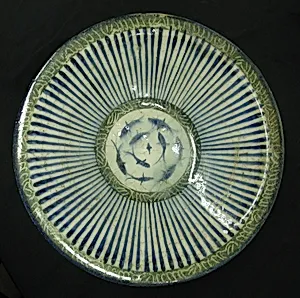
Bowl with Central Fish Motif
Unknown Artist
13th century
Medium
Stonepaste; incised and polychrome painted under transparent glaze
Dimensions
H. 2 7/8 in. (7.3 cm) Diam. 13 3/8 in. (34 cm)
Classification
Ceramics
Department
Islamic Art
Museum
Metropolitan Museum of Art, New York, NY
Credit
H.O. Havemeyer Collection, Gift of Horace Havemeyer, 1945
Accession Number
45.153.1
Rights
Public Domain
Tags
Art Historical Context
This exquisite 13th-century bowl the Islamic Art collection at the Metropolitan Museum of Art the pinnacle of medieval ceramic innovation. Crafted by an unknown artist, the wide, shallow vessel (height 2⅞ inches, diameter 13⅜ inches) features a striking central fish motif, rendered in a stonepaste body—a sophisticated composite of quartz, glass frit, and clay developed in the Islamic world to mimic the translucency of Chinese porcelain, which was unavailable at the time. The artistry lies in its meticulous techniques: designs were incised (scratched) into theired body, then adorned with polychrome paints in vibrant hues before a transparent glaze sealed the surface, firing to produce luminous, durable colors. This method, prominent in 13th-century Persia and Syria, allowed for intricate detailing and resistance to everyday use, blending utility with opulence. Fish motifs like this one often symbolized abundance, fertility, or the vitality of water in Islamic decorative arts, reflecting a cultural appreciation for nature's harmony. A gift from the H.O. Havemeyer Collection in 1945, this bowl invites us to marvel at the anonymous potter's skill and the enduring legacy of Islamic ceramics.