
Bowl with Cover
Unknown Artist
5th–7th century
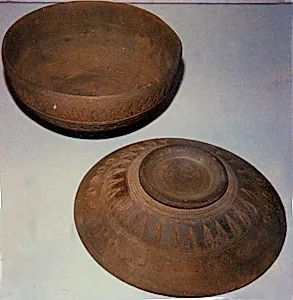
Medium
High-fired pottery; proto-porcelain
Dimensions
H. 3 15/16 in. (10 cm); Diam. 5 1/2 in. (14 cm)
Classification
Ceramics
Culture & Period
Korea · Three Kingdoms period (57 B.C.–A.D. 676)
Department
Asian Art
Museum
Metropolitan Museum of Art, New York, NY
Credit
Purchase, Paul Singer Gift and Rogers Fund, 1991
Accession Number
1991.479.1a, b
Rights
Public Domain
Art Historical Context
This elegant Bowl with Cover, crafted in Korea during the Three Kingdoms (57 B.C.–A.D. 676), the sophisticated ceramics of the 5th–7th centuries. Standing just under 4 inches tall and 5½ inches wide, its compact form suggests it was designed for practical daily use—perhaps for serving food or storing precious items—while reflecting the era's cultural refinement. The Three Kingdoms (Goguryeo, Baekje, and Silla) were a time of dynamic competition, artistic innovation, and growing Buddhist influence, which spurred advancements in pottery production across the peninsula. Made from high-fired pottery known as proto-porcelain, this vessel represents a pivotal technological leap. Fired at temperatures exceeding 1,200°C, it achieved a smooth, dense body with a subtle grayish-white hue, foreshadowing the true porcelain that would later dominate East Asian ceramics. Unlike earlier earthenware, this stoneware's vitrified surface resisted porosity, enhancing durability and aesthetic appeal. Such pieces highlight Korea's early mastery of kilns and glazes, bridging Neolithic traditions with later Goryeo celadons. Housed in the Metropolitan Museum of Art's Asian Art Department, this bowl invites us to appreciate the anonymous potter's skill and the enduring legacy of Korean craftsmanship, where form met function in harmonious simplicity.