
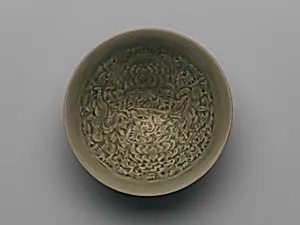
Bowl with Two Boys among Foliage
Unknown Artist
11th–12th century
Medium
Stoneware with mold-impressed decoration under celadon glaze (Yaozhou ware)
Dimensions
H. 2 3/8 in. (6 cm); Diam. 7 1/8 in. (18.1 cm)
Classification
Ceramics
Culture & Period
China · Northern Song dynasty (960–1127)
Department
Asian Art
Museum
Metropolitan Museum of Art, New York, NY
Credit
Gift of Sadajiro Yamanaka, 1911
Accession Number
11.8.7
Rights
Public Domain
Tags
Art Historical Context
This delicate stoneware bowl, titled *Bowl with Two Boys Foliage*, hails from China's Northern Song dynasty (960–7), a golden era of artistic refinement. Crafted in the 11th–12th century at the renowned Yaozhou kilns inaanxi province, it just 2⅜ inches high and 7⅛ inches in diameter—perfect for intimate tea ceremonies or daily use. The bowl's surface features lively mold-impressed designs of two playful boys frolicking amid lush foliage, brought to life under a signature celadon glaze that glows with a subtle jade-green hue. Yaozhou ware exemplifies Song ceramic innovation, where artisans pressed intricate motifs into the clay using molds before applying the iron-rich celadon glaze and firing at high temperatures. This technique created durable yet elegant pieces with fine crackle patterns in the glaze, prized for their aesthetic harmony with nature. Celadon, evoking mist-shrouded landscapes, symbolized purity and was highly sought after domestically and abroad. In Northern Song culture, such bowls reflected a sophisticated appreciation for everyday beauty, blending whimsy (the boys evoking childhood joy) with naturalistic motifs. Donated to the Metropolitan Museum of Art in 1911 by collector Sadajiro Yamanaka, this treasure offers a window into China's ceramic mastery.