
Box
Unknown Artist
18th century
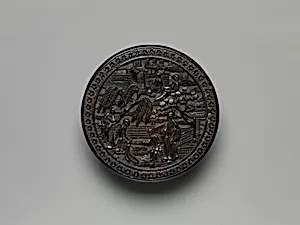
Medium
Tortoise shell
Dimensions
H. 1 in. (2.5 cm); Diam. 2 13/16 in. (7.1 cm)
Classification
Shell
Culture & Period
China · Qing dynasty (1644–1911)
Department
Asian Art
Museum
Metropolitan Museum of Art, New York, NY
Credit
Bequest of Mary Stillman Harkness, 1950
Accession Number
50.145.325a, b
Rights
Public Domain
Tags
Art Historical Context
This exquisite tortoise shell box, crafted in 18th-century China during Qing dynasty (16441911), exemplifies the era's mastery of luxury materials and intricate craftsmanship. Measuring just 1 inch high and nearly 3 inches in diameter, petite circular container was likely designed for personal use—perhaps to hold cosmetics, jewelry, or snuff—tobacco, reflecting the refined tastes of the Qing elite. The translucent, golden hues of tortoise shell, prized its natural beauty and durability, were carefully shaped and polished, showcasing the material's versatility in Asian decorative arts. Adorned with delicate motifs of human figures amid trees, the box captures scenes evoking harmony between people and nature, a recurring theme in Chinese art symbolizing balance and prosperity. Artisans employed precise carving or inlay techniques to bring these elements to life, highlighting the technical prowess of Qing workshops where shell was heated, molded, and engraved to create luminous, three-dimensional effects. Such objects were status symbols, blending functionality with artistry. Today, this rare survivor graces the Metropolitan Museum of Art's Asian Art collection, thanks to the 1950 bequest of Mary Stillman Harkness. It offers a glimpse into the opulent world of imperial China, reminding us how everyday luxuries embodied profound cultural elegance.