
Box
19th century
Medium
Lacquer
Dimensions
H. 1 in. (2.5 cm); W. 3 7/8 in. (9.8 cm); D. 3 7/8 in. (9.8 cm)
Classification
Lacquer
Culture
Japan
Department
Asian Art
Museum
Metropolitan Museum of Art, New York, NY
Credit
The Howard Mansfield Collection, Purchase, Rogers Fund, 1936
Accession Number
36.100.168a, b
Rights
Public Domain
Tags
Art Historical Context
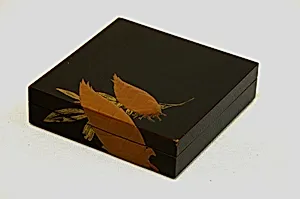
Behold this delicate lacquer *Box* by Shibata Zeshin, a masterpiece of 19th-century Japanese craftsmanship housed in the Metropolitan Museum of Art's Asian Art Department Measuring just 1 inch high and nearly 4 inches wide and deep, this petite container—likely used for sweets, incense, or small treasures—exemplifies the refined elegance of Edo-period luxury goods. Its surface, adorned with motifs of leaves (as suggested by its tags), captures nature's subtle beauty through Zeshin's virtuoso lacquer techniques. Shibata Zeshin (1807–1891), one of Japan's greatest lacquer artists, bridged traditional urushi lacquering with innovative painting methods during the late Edo era. Urushi, derived from the sap of the lacquer tree, is prized for its glossy durability and ability to layer colors, gold powders, and inlays like mother-of-pearl. Zeshin elevated the medium by mimicking ink brushstrokes and realism, making his works rival paintings in detail and depth—a revolutionary fusion that revitalized lacquer art amid Japan's opening to the West. Acquired through The Howard Mansfield Collection via the Rogers Fund in 1936, this box highlights lacquerware's cultural role in Japan as both functional art and status symbol. Visitors, marvel at how Zeshin's precision transforms a simple object into a timeless portal to samurai-era refinement.
About the Artist
Shibata Zeshin · 1807–1891
Japanese, 1807–1891