
Box
Unknown Artist
1675–1700
Medium
Oak, pine
Dimensions
7 x 21 x 13 1/4 in. (17.8 x 53.3 x 33.7 cm)
Classification
Box
Culture
American
Department
The American Wing
Museum
Metropolitan Museum of Art, New York, NY
Credit
Gift of Mrs. J. Woodhull Overton, 1966
Accession Number
66.190.2
Rights
Public Domain
Art Historical Context
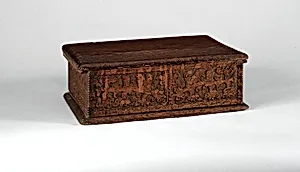
Nestled in The Metropolitan Museum of Art's American Wing, this unassuming yet elegant wooden box, crafted between 1675 and 1700, offers a window into early colonial American life. Made from sturdy oak and pine—two of the most readily available hardwoods in the New World—the box measures a compact 7 x 21 x 13¼ inches, perfect for storing valuables, documents, or household goods in modest homes. Donated in 1966 by Mrs. J. Woodhull Over, it exemplifies the practical craftsmanship of anonymous artisans during a time when European settlers were establishing self-sufficient communities. Though the artist remains unknown, the box's construction highlights the ingenuity of 17th-century American woodworkers. Oak provided durable strength for the frame, while pine offered lighter, workable panels, joined likely through traditional mortise-and-tenon or pegged techniques passed down from English traditions but adapted to local resources. Such pieces were essential in Puritan households, blending utility with subtle restraint reflective of colonial aesthetics—simple forms without ornate decoration, emphasizing function over flourish. This artifact's cultural significance lies in its everyday authenticity: it whispers stories of resilience and resourcefulness in the fledgling American colonies, reminding us that beauty often hid in the humble tools of daily survival. A true treasure for history lovers!