
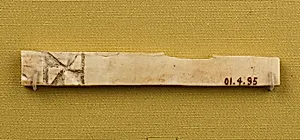
Box inlay with a geometric pattern
Unknown Artist
ca. 3100–2900 B.C.
Medium
Ivory
Dimensions
L: 7 cm (2 3/4 in.)
Classification
Inlay, from a box
Period
Early Dynastic Period
Department
Egyptian Art
Museum
Metropolitan Museum of Art, New York, NY
Credit
Gift of Egypt Exploration Fund, 1901
Accession Number
01.4.95
Rights
Public Domain
Art Historical Context
Step into the dawn of Egyptian civilization with this delicate *Box inlay with a geometric pattern*, crafted around 3100–2900 B.C. during Dynasty 1 of the Earlyastic Period. This tiny ivory piece, just 7 cm long, hails from a time when Egypt's first pharaohs were unifying the Nile Valley, laying the foundations for the grand pyramids and temples to come. Discovered and gifted to the Metropolitan Museum of Art in 1901, it offers a glimpse into the elite craftsmanship of this formative era. Carved from precious ivory—likely elephant tusk, a luxury material symbolizing wealth and status—the inlay features precise geometric designs meant to adorn wooden boxes or furniture. Artisans meticulously cut and shaped the thin ivory strips to interlock seamlessly, showcasing early mastery of inlay techniques that foreshadowed the intricate decorations of later Egyptian art. These patterns, simple yet sophisticated, reflect the Predynastic transition to more structured aesthetics. Culturally, such inlays highlight the sophistication of everyday elite objects in a society on the cusp of monumental achievements. Though the artist remains unknown, this artifact whispers of innovation and beauty in ancient Egypt's formative years, inviting us to marvel at humanity's enduring creative spark.