
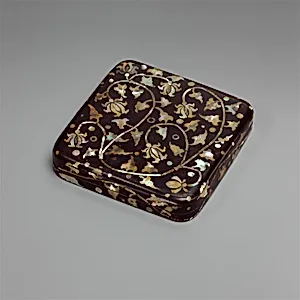
나전 칠 모란 넝쿨 무늬 상자 조선|螺鈿漆牡丹唐草文箱子 朝鮮|Box with decoration of peony scrolls
Unknown Artist
15th–16th century
Medium
Lacquer inlaid with mother-of-pearl
Dimensions
H. 3/4 in. (1.9 cm); W. 3 7/8 in. (9.8 cm); L. 3 7/8 in. (9.8 cm)
Classification
Lacquer
Culture & Period
Korea · Joseon dynasty (1392–1910)
Department
Asian Art
Museum
Metropolitan Museum of Art, New York, NY
Credit
Gift of Florence and Herbert Irving, 2015
Accession Number
2015.500.3.2a, b
Rights
Public Domain
Tags
Art Historical Context
This exquisite small box, crafted during Korea's Joseon dynasty (2–1910) in the 15th–16th century, showcases the pinnacle of *najeon chil*—lacquerware inlaid with shimmering mother-of-pearl Measuring just under 4 inches square and three-quarters of an inch high, it was likely used to store precious cosmetics, jewelry, or seals, reflecting the refined tastes of the elite. The surface blooms with intricate peony scroll motifs, their lush vines and layered petals rendered in delicate shell fragments that catch the light like iridescent jewels. The *najeon* technique, a hallmark of Joseon craftsmanship, involved cutting thin mother-of-pearl slices from abalone or other shells, shaping them precisely, and embedding them into layers of black lacquer before polishing to a glossy sheen. This labor-intensive process demanded extraordinary skill and patience, making such objects symbols of status and artistry. Peonies, known as "king of flowers" in East Asian culture, evoked prosperity, nobility, and the fleeting beauty of spring—perfect for a Confucian society that prized harmony and elegance. Housed in the Metropolitan Museum of Art's Asian Art department (gift of Florence and Herbert Irving, 2015), this anonymous masterpiece endures as a testament to Joseon Korea's innovative decorative arts, blending functionality with poetic splendor.