
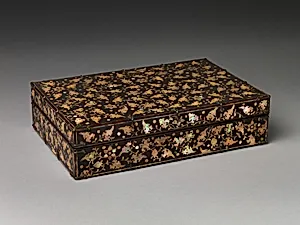
나전 칠 모란 넝쿨 무늬 서류함 조선|螺鈿漆牡丹唐草文書類函 朝鮮|Stationery box decorated with peony scrolls
Unknown Artist
15th–16th century
Medium
Lacquer inlaid with mother-of-pearl; brass fittings
Dimensions
H. 3 5/8 in. (9.2 cm); W. 9 1/2 in. (24.1 cm); L. 14 3/8 in. (36.5 cm)
Classification
Lacquer
Culture & Period
Korea · Joseon dynasty (1392–1910)
Department
Asian Art
Museum
Metropolitan Museum of Art, New York, NY
Credit
Gift of Florence and Herbert Irving, 2015
Accession Number
2015.500.3.1a, b
Rights
Public Domain
Tags
Art Historical Context
This exquisite stationery box from Korea's Joseon dynasty (1392–1910), dating to the 15th–16th century, exemplifies the era's masterful lacquerware craftsmanship. Crafted for storing documents, brushes, and inkstones, it reflects the Confucian emphasis on scholarly pursuits among the elite yangban class. Its compact form—measuring just 3⅝ inches high, 9½ inches wide, and 14⅜ inches long—made it ideal for a scholar's desk, blending utility with opulent decoration. The box's surface is adorned with intricate peony scroll motifs, symbols of wealth, honor, and prosperity in East Asian culture. Artisans applied layers of black lacquer, then meticulously inlaid thin slices of shimmering mother-of-pearl (najeon technique), creating a luminous, iridescent effect that catches the light like jewels. Brass fittings add durability and elegance, highlighting the technical precision of Joseon workshops. As a gift to the Metropolitan Museum of Art from Florence and Herbert Irving in 2015, this piece showcases Korea's refined aesthetic during a golden age of decorative arts, where everyday objects became canvases for poetic beauty and cultural pride. Visitors will appreciate its timeless allure up close.