
Boy's Fingered Gauntlet for the Left Hand
c. 1560/80
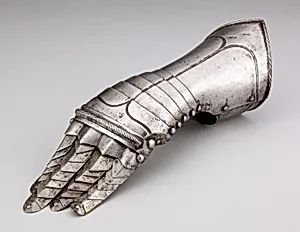
Medium
Steel
Dimensions
H.: 27.9 cm (11 in.)
Classification
suit-gauntlet
Department
Applied Arts of Europe
Museum
Art Institute of Chicago
Accession Number
116489
Rights
Public Domain
Art Historical Context
This boy's fingered gauntlet for the left hand, dating to around 1560–80, is a finely crafted piece of 16th-century European armor. Made of steel by an unknown artisan and standing just 11 inches high, it formed part of a complete suit designed for a young wearer—likely a noble youth training for knighthood, tournaments, or ceremonial duties. Its modest size underscores the era’s tradition of outfitting even children of high rank in protective gear that mirrored adult armor. The fingered construction, with separately articulated plates for each digit, marked an important evolution from earlier mitten-style gauntlets, offering greater dexterity while still shielding the hand. In a period when firearms were transforming warfare, such armor increasingly served as a display of status, craftsmanship, and lingering chivalric ideals rather than purely battlefield function. The unknown maker’s skill in shaping and joining steel plates highlights the sophisticated metalworking traditions of Renaissance Europe. Now in the Art Institute of Chicago’s Applied Arts of Europe collection, this gauntlet invites visitors to consider how armor blended utility, artistry, and social identity in the late 16th century.
About the Artist
Unknown
The artist designated as "Unknown" in our virtual museum's collection exemplifies a poignant chapter in art history: creators whose identities have faded into obscurity despite the enduring power of their work. With only one known artwork attributed to them in our holdings, this figure represents countless anonymous hands that shaped visual culture across centuries. Museums worldwide, including th...