
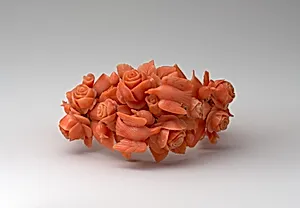
Bracelet (part of parure)
Unknown Artist
ca. 1860
Medium
Coral and gold
Dimensions
2 3/4 × 3 in. (7 × 7.6 cm)
Classification
Natural Substances
Culture
Italian, Naples
Department
European Sculpture and Decorative Arts
Museum
Metropolitan Museum of Art, New York, NY
Credit
Gift of W. Truslow Hyde Jr., 1962
Accession Number
62.194.1
Rights
Public Domain
Tags
Art Historical Context
This exquisite bracelet, crafted around 1860 in Naples, Italy, forms part of a parure—a coordinated jewelry suite popular among Europe's elite during the Victorian era. Fashioned from vibrant red coral and gleaming gold, it measures a delicate 2¾ × 3 inches, for adorning the wrist. Intricate carvings of birds and flowers, suggested by its motifs, evoke the natural world, blending organic beauty with fine craftsmanship typical of Neapolitan workshops. Naples held a renowned reputation as a center for coral jewelry in the 19th century, harvesting precious red coral from the Mediterranean for export across Europe. Artisans skillfully carved the lightweight, colorful "natural substance" into lifelike forms, then mounted them in gold settings using techniques like filigree and granulation for both strength and elegance. This piece reflects the era's Romantic fascination with nature and the exotic, while coral symbolized health and protection in Mediterranean cultures. Today, this gift to the Metropolitan Museum of Art from W. Truslow Hyde Jr. in 1962 shines in the European Sculpture and Decorative Arts collection, offering a glimpse into 19th-century luxury and the artistry of anonymous Italian masters. Visitors can appreciate how such jewels bridged fashion, folklore, and fine art.