
Bracteate
Unknown Artist
500–700, with later restoration
Medium
Bronze, silvered or tinned, gold, iron pin
Dimensions
Overall: 1 1/8 x 3/8 in. (2.8 x 0.9 cm)
Classification
Metalwork-Bronze
Culture
Unknown
Department
Medieval Art
Museum
Metropolitan Museum of Art, New York, NY
Credit
Gift of J. Pierpont Morgan, 1917
Accession Number
17.192.73
Rights
Public Domain
Tags
Art Historical Context
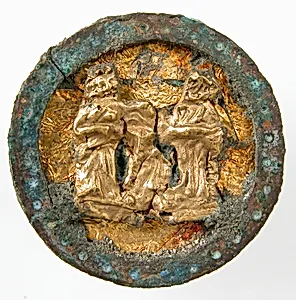
This delicate bracteate, a small pendant or brooch from around 500–700 CE, showcases the exquisite metalwork of early medieval Europe the Migration Period. Craft from bronze that has been silvered or tinned a luminous finish, with touches of gold an iron pin for attachment, it measures just1 1/8 3/8 inches—perfectly suited for personalment. Now housed in Metropolitan Museum of Art's Art department, thanks to a 1917 gift from J. Pierpont Morgan, it later underwent restoration to preserve its intricate details. Bracteates like this were prestige items, likely worn by elites as amulets or status symbols amid the cultural upheavals following Rome's fall. Featuring human figures (as suggested by its tags), it reflects motifs from Germanic or Scandinavian traditions, blending pagan iconography with emerging Christian influences. The thin, single-sided stamping technique allowed for bold, symbolic designs on minimal material, highlighting the era's masterful fusion of artistry and portability. Though its exact culture remains unknown, this artifact offers a tantalizing glimpse into a world of warriors, migrations, and mysticism—inviting us to ponder the stories etched into its tiny surface.