
Breakfast Service (déjeuner)
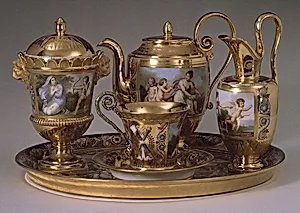
Medium
Hard-paste porcelain
Dimensions
See individual records
Classification
Ceramics-Porcelain
Culture
French, Sèvres
Department
European Sculpture and Decorative Arts
Museum
Metropolitan Museum of Art, New York, NY
Credit
Gift of Mr. and Mrs. D. N. Heineman, 1956
Accession Number
56.29.1–.8
Rights
Public Domain
Tags
Art Historical Context
This exquisite *Breakfast Service (déjeuner, crafted in 1813 by the renowned Sèvres Manufactory in France, exemplifies the pinnacle of Empire-era porcelain artistry. Produced under the direction of painters like Etienne Charles Le Gu and modeler Jacques-Nicolas S (or Sinsson), features hard-paste porcelain—a technically advanced material Sèvres adopted around this time for its durability and fine translucency, rivaling Meissen wares. As a gift to the Metropolitan Museum of Art from Mr. and Mrs. D. N. Heineman in 1956, this service reflects the opulence of Napoleonic France, when Sèvres supplied luxury goods to royalty and the elite. The set's delicate forms, likely including cups, saucers, and a central stand, are adorned with gilded accents and painted scenes of graceful women and playful Cupids—themes evoking neoclassical mythology and romantic frivolity. These motifs, rendered in vibrant enamels, highlight Sèvres' mastery of overglaze painting and intricate gilding techniques, which required multiple firings for lasting brilliance. Such services were status symbols for intimate morning rituals among the aristocracy. Today, this *déjeuner* offers a window into early 19th-century French decorative arts, blending technical innovation with elegant storytelling. Visitors can appreciate how it captured the era's blend of imperial grandeur and tender domesticity.