
Breastplate
ca. 1530–35
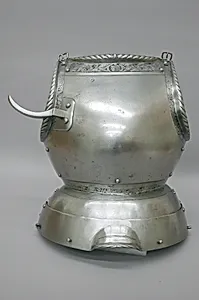
Medium
Steel
Dimensions
H. 15 3/4 in. (40 cm); W. 15 1/8 in. (38.4 cm); D. 8 in. (20.3 cm); Wt. 6 lb. 12.3 oz. (3070.3 g)
Classification
Armor Parts-Breastplates
Culture
German, Nuremberg
Department
Arms and Armor
Museum
Metropolitan Museum of Art, New York, NY
Credit
John Stoneacre Ellis Collection, Gift of Mrs. Ellis and Augustus Van Horne Ellis, 1896
Accession Number
96.5.115c
Rights
Public Domain
Art Historical Context
This finely crafted steel breastplate, by the Nuremberg armorer Valentin Siebenbürger 1530–35, exemplifies the pinnacle of German Renaissance armor-making. Measuring 15¾ inches high, 15⅛ inches wide, and 8 inches deep, it weighs substantial yet manageable 6 pounds 12.3 ounces, designed to shield the wearer's torso during the intense battles of the era. Nuremberg, a thriving hub of metalworking in the Holy Roman Empire, was renowned for producing high-quality arms and armor that balanced protection with mobility for knights and infantry like the Landsknechts. Siebenbürger's work highlights the technical mastery of steel forging and shaping, techniques that allowed for form-fitting plates offering superior defense against blades and projectiles. The breastplate's robust construction reflects the transitional period when plate armor reached its zenith before firearms diminished its dominance. Its presence in the Metropolitan Museum of Art's Arms and Armor Department, gifted in 1896 from the John Stoneacre Ellis Collection, invites us to appreciate not just its defensive role, but the artistry in its precise engineering—a testament to 16th-century German craftsmanship.