
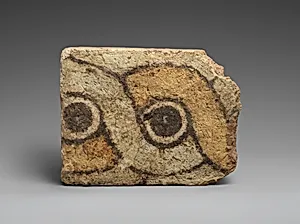
Brick fragment with a guilloche design
Unknown Artist
ca. 9th century BCE
Medium
Ceramic, glaze
Dimensions
4 9/16 in. × 6 1/4 in. × 9 in. (11.6 × 15.9 × 22.9 cm)
Classification
Ceramics
Culture & Period
Assyrian · Neo-Assyrian
Department
Ancient Near Eastern Art
Museum
Metropolitan Museum of Art, New York, NY
Credit
Rogers Fund, 1958
Accession Number
58.31.59
Rights
Public Domain
Art Historical Context
This modest yet captivating brick fragment hails from the Neo-Assy period, around the 9th century BCE, during height of the Assyrian Empire's power in ancient Mesopotamia. Crafted from ceramic with a glossy glaze, it measures about 4½ by 6¼ by 9 inches, suggesting it was part of a architectural panel adorning a grand palace or temple wall. Acquired by the Metropolitan Museum of Art through the Fund in 1958, it offers a tangible glimpse into the sophisticated building practices of Assyrian artisans. The fragment's star feature is its guilloche design—a classic interlocking pattern of curved, rope-like bands that served as an elegant border motif. This technique, executed in glazed ceramic, highlights the Assyrians' mastery of firing kilns to achieve durable, weather-resistant surfaces with vibrant sheen. Such glazed bricks were revolutionary for exterior decorations, protecting intricate designs from the harsh Mesopotamian climate while dazzling viewers with their luster. In Assyrian culture, these elements symbolized imperial grandeur and divine order, often framing scenes of kings, gods, or mythical beasts on monumental gateways and facades. Though incomplete, this piece evokes the awe of ancient Nineveh or Nimrud, reminding us how everyday materials became vehicles for artistic and political expression in one of history's most formidable civilizations.