
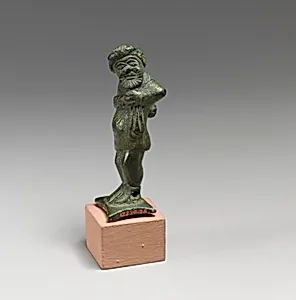
Bronze statuette of a comic actor
Unknown Artist
ca. 1st–2nd century CE
Medium
Bronze
Dimensions
H. 2 13/16 in. (7.2 cm)
Classification
Bronzes
Culture & Period
Roman · Imperial
Department
Greek and Roman Art
Museum
Metropolitan Museum of Art, New York, NY
Credit
Rogers Fund, 1917
Accession Number
17.230.28
Rights
Public Domain
Tags
Art Historical Context
This delightful bronze statuette captures a comic actor from the Roman Imperial period (ca. 1st–nd century CE), standing just 2 13/16 inches (7.2 cm) tall. Crafted by an unknown artist it exemplifies the finely detailed bronzes produced in workshops across the Roman Empire, likely using the lost-wax casting that allowed for intricate features like expressive faces and dynamic poses. Now housed in the Metropolitan Museum Art's Greek and Roman Department (acquired via the Rogers Fund 1917), this small figurine would have adorned a wealthy Roman's home or lararium as a charming decorative piece. Comic actors were stars of Roman popular entertainment, performing in lively mimes, Atellan farces, and theater productions that poked fun at everyday life, politics, and social norms. This statuette immortalizes one such performer, his exaggerated costume and gesture hinting at the slapstick humor that captivated audiences from the streets of Pompeii to the grand stages of Rome. Such bronzes offer rare glimpses into the vibrant performing arts of antiquity, where comedy provided comic relief amid imperial grandeur. The survival of this tiny bronze is remarkable, as most Roman bronzes were melted down over centuries for their valuable metal. Its preservation underscores the artistic mastery of Roman sculptors in miniaturizing human expression, making high culture accessible in everyday settings. Visitors, imagine this witty figure entertaining at a Roman banquet—timeless humor in enduring metal!