
Brooch
Unknown Artist
1st century BCE–1st century CE
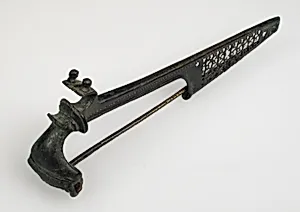
Medium
Copper alloy
Dimensions
Overall: 7 1/4 x 1 1/4 x 2 3/16 in. (18.4 x 3.2 x 5.5 cm)
Classification
Metalwork-Bronze
Culture
Celtic (?)
Department
Medieval Art
Museum
Metropolitan Museum of Art, New York, NY
Credit
Rogers Fund, 1951
Accession Number
51.115
Rights
Public Domain
Art Historical Context
This exquisite copper alloy brooch, dating to the 1st century BCE–st century CE, hails from a possibly Celtic culture and exemplifies the masterful metalworking traditions of ancient Europe. Measuring 7 1/4 x 1 1/4 x 2 3/16 inches, it belongs to the fibula tradition—pinned fasteners worn on garments that doubled as status symbols. Crafted from bronze, a durable alloy of copper and tin prized for its workability, such brooches often featured intricate designs reflecting the swirling motifs of Celtic La Tène art, blending functionality with artistry. Though the artist remains unknown, the piece's survival speaks to the Celts' renowned skill in casting and hammering metal, techniques that allowed for lightweight yet robust jewelry. Acquired through the Rogers Fund in 1951 and housed in the Metropolitan Museum of Art's Medieval Art Department, it bridges ancient and early medieval worlds, offering a glimpse into daily life and ornamental splendor among Iron Age peoples. Visitors will appreciate how this modest adornment reveals the Celts' sophisticated aesthetic, where everyday objects became canvases for cultural expression.