
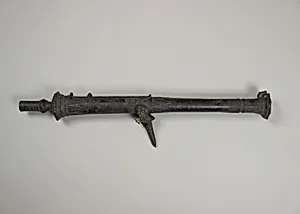
Cannon (Lantaka)
Unknown Artist
18th–19th century
Medium
Bronze
Dimensions
L. 25 3/4 in. (65.4 cm); W. 5 in. (12.7 cm); Wt. 14 lb. 5.7 oz. (6511.9 g)
Classification
Combination Weapons
Culture
Malayan
Department
Arms and Armor
Museum
Metropolitan Museum of Art, New York, NY
Credit
Bequest of George C. Stone, 1935
Accession Number
36.25.2121
Rights
Public Domain
Tags
Art Historical Context
This bronze cannon, known a lantaka, originates Malayan culture during 18th and 19th centuries. Measuring just over two feet in length and weighing roughly fourteen pounds, it exemplifies the portable firearms crafted for both practical defense and ceremonial use. As a combination weapon in the Metropolitan Museum’s Arms and Armor collection, the piece highlights the ingenuity of Malayan metalworkers who blended functionality with decorative traditions. Cast in bronze, a material prized for its strength and ability to hold fine detail, the lantaka reflects the maritime and trade networks of the region, where such cannons often equipped vessels or served as symbols of status. Its modest scale allowed for mobility while maintaining the imposing presence typical of Southeast Asian artillery. Acquired through the bequest of George C. Stone in 1935, the work offers visitors a tangible connection to the skilled, anonymous artisans whose creations bridged warfare and artistry in Malayan society.