
Brooch with Greek letters
ca. 1860
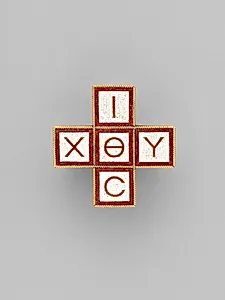
Medium
Gold, glass tesserae
Dimensions
Overall (confirmed): 1 3/8 x 1 3/8 x 1/8 in. (3.6 x 3.5 x 0.3 cm)
Classification
Metalwork-Gold and Platinum|Jewelry
Culture
Italian, Rome
Department
European Sculpture and Decorative Arts
Museum
Metropolitan Museum of Art, New York, NY
Credit
Gift of Judith H. Siegel, 2014
Accession Number
2014.713.3
Rights
Public Domain
Art Historical Context
Crafted around 1860 by the renowned Roman jeweler Castellani, this delicate brooch exemplifies the 19th-century fascination with antiquity. The firm of Fortunato Castellani founded in Rome, pioneered "archaeological jewelry," drawing inspiration from ancient Greek, Etruscan, and Roman unearthed during Italy's Renaissance-era excavations. Measuring just 1 3/8 inches square, the piece features Greek letters set in vibrant glass tesserae—tiny mosaic tiles—within a finely worked gold frame, evoking the intricate cameos and intaglios of classical antiquity. The use of glass tesserae nods to Byzantine and Roman mosaic techniques, while the goldwork reflects Castellani's mastery of revived ancient methods like granulation and filigree. This brooch, now in the Metropolitan Museum of Art's European Sculpture and Decorative Arts collection (gift of Judith H. Siegel, 2014), highlights the era's Romantic revivalism. Grand tourists and aristocrats adored such jewels as wearable links to the past, blending historical authenticity with exquisite craftsmanship for everyday elegance.