
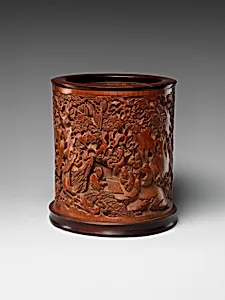
清康熙 竹雕筆筒|Brush holder decorated with garden scene
Unknown Artist
Medium
Bamboo
Dimensions
H. 6 5/8 in. (16.8 cm); Diam. 4 1/4 in. (10.8 cm); Diam. of rim: 5 3/4 in. (14.6 cm); Diam. of foot: 6 in. (15.2 cm)
Classification
Bamboo
Culture & Period
China · Qing dynasty (1368–1644), Kangxi period (1662–1722)
Department
Asian Art
Museum
Metropolitan Museum of Art, New York, NY
Credit
Purchase, The Vincent Astor Foundation Gift, 2011
Accession Number
2011.7
Rights
Public Domain
Tags
Art Historical Context
This exquisite bamboo brush holder, crafted during the Kangxi period (1662–1722) of China's Qing dynasty, captures the elegance of scholarly life. Carved from a single piece of bamboo—likely its root for its natural irregularity—the cylindrical vessel stands about 6⅝ inches tall, with a widening foot and rim ideal for holding brushes upright in water or ink. Its surface blooms with a lively garden scene: gentlemen engaged in leisurely games amid lush trees and graceful deer, evoking a paradise of nature and human delight. Bamboo carving flourished in the Kangxi era, a golden age of artistic innovation under Emperor Kangxi's patronage, when literati artists honed this demanding medium as a mark of cultivated taste. Unlike painting or porcelain, bamboo's organic texture required masterful knife work to reveal intricate relief designs without splitting the material, showcasing the carver's patience and precision. These pen tongs (bitong) were essential tools for calligraphers and painters, symbolizing the scholar's pursuit of wenren (literary refinement) amid everyday rituals. In Chinese culture, deer represent longevity and good fortune, while garden motifs idealized rustic retreats from courtly bustle—perfect for a scholar's studio. Acquired by The Metropolitan Museum of Art through the Vincent Astor Foundation in 2011, this anonymous masterpiece invites us to ponder the quiet artistry of imperial China's intellectual elite.