
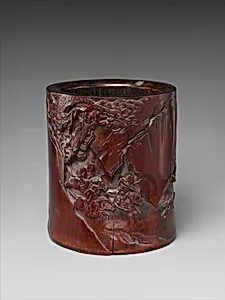
明末清初 周乃始款竹刻狩獵圖筆筒|Brush pot with hunting scene
17th century
Medium
Bamboo
Dimensions
H. 5 3/4 in. (14.6 cm); Diam. 5 in, (12.7 cm)
Classification
Bamboo
Culture & Period
China · Ming (1368–1644)–Qing (1644–1911) dynasty
Department
Asian Art
Museum
Metropolitan Museum of Art, New York, NY
Credit
Gift of Florence and Herbert Irving, 2015
Accession Number
2015.500.6.35
Rights
Public Domain
Art Historical Context
This exquisite bamboo brush pot, signed by the carver Zhou Naishi and dated to the 17th century, captures the artistic finesse of China's Ming-Qing dynastic transition (late Ming: 1368–1644; early Qing: 164–1911). Standing just 5¾ inches tall with a 5-inch diameter, it served as a practical yet elegant desk accessory for literati scholars, holding brushes during calligraphy and painting sessions. The intricate hunting scene carved into its surface reflects the period's blend of naturalism and scholarly refinement, evoking the thrill of the chase amid lush landscapes. Crafted from bamboo—a humble, sustainable material revered in Chinese culture for symbolizing resilience and purity—Zhou's work showcases the zhu ke (bamboo carving) technique. Artists meticulously incised designs using fine knives, allowing the bamboo's natural patina to highlight motifs like galloping horses, archers, and wildlife. This medium gained prominence in the late Ming as an accessible alternative to jade or ivory, democratizing high art for the educated elite amid political upheaval. Housed in the Metropolitan Museum of Art's Asian Art Department (gift of Florence and Herbert Irving, 2015), this piece exemplifies how everyday objects became canvases for personal expression. For visitors, it offers a window into the scholarly life of imperial China, where art and utility intertwined seamlessly.