
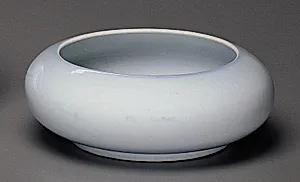
Brush Washer
Kangxi period, 1662/1722
Medium
porcelain with pale blue glaze
Dimensions
overall: 4.2 x 11.8 cm (1 5/8 x 4 5/8 in.)
Classification
Decorative Art
Department
CSD
Museum
National Gallery of Art, Washington, D.C.
Credit
Widener Collection
Accession Number
1942.9.488
Rights
Public Domain
Art Historical Context
This delicate *Brush Washer* from China's Qing Dynasty, crafted during the Kangxi period1662–1722), exemplifies the era's mastery of porcelain artistry. Measuring just 4.2 x 11.8 cm, this small vessel was designed for scholars and calligraphers to rinse their ink brushes, a practical yet elegant tool in the literati studio. Its pale blue glaze a hallmark of Kangxi innovation, evokes a serene, misty sky—likely a refined monochrome effect achieved through precise firing techniques at the imperial kilns in Jingdezhen. The Kangxi reign marked a golden age for Chinese porcelain, with potters pushing boundaries in glaze chemistry and form. This washer's subtle hue and smooth, flawless surface reflect the period's emphasis on purity and understatement, aligning with Confucian ideals of refined simplicity. Unlike bolder blue-and-white wares, monochrome glazes like this pale blue celebrated technical virtuosity, often reserved for elite connoisseurs. Housed in the National Gallery of Art's Widener Collection, this piece transports us to 17th-century China, where art and daily ritual intertwined. Imagine a scholar pausing mid-stroke, the soft glow of lantern light dancing on its glaze—a testament to porcelain's enduring cultural prestige.
About the Artist
Chinese Qing Dynasty · 1644–present
"Chinese Qing Dynasty" serves as a collective attribution in museum collections for anonymous artworks produced during China's Qing era (1644–1912), encompassing the works of imperial workshop artisans rather than a single individual. These creators operated primarily from the imperial kilns at Jingdezhen, where potters, painters, and enamellers collaborated under strict court oversight, though sp...