
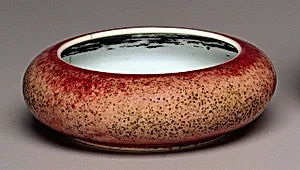
Brush Washer
Kangxi period, 1662/1722
Medium
porcelain with peachbloom glaze
Dimensions
overall: 3.5 x 11.8 cm (1 3/8 x 4 5/8 in.)
Classification
Decorative Art
Department
CSD
Museum
National Gallery of Art, Washington, D.C.
Credit
Widener Collection
Accession Number
1942.9.504
Rights
Public Domain
Art Historical Context
This delicate **Brush Washer** from China's Qing Dynasty, crafted during the Kangxi period1662–1722), exemplifies the era's mastery of porcelain artistry. Produced at the imperial kilns of Jingdezhen, it served a practical yet refined purpose: scholars and calligraphers used it to rinse their writing brushes, preventing ink buildup during artistic pursuits. Measuring just 3.5 x 11.8 cm, its petite, elegant form—often lotus-leaf shaped—reflects the literati ideal of blending utility with subtle beauty. The standout feature is its peachbloom glaze, a hallmark innovation of Kangxi potters. This soft, roseate hue, mimicking the blush of peach blossoms at dawn, was achieved through precise copper-oxide formulas fired in specialized reduction kilns. Translucent and iridescent, it shifts subtly in light, evoking nature's fleeting elegance. Such glazes were highly prized, reserved for imperial tribute pieces, symbolizing the emperor's patronage of the arts. Housed in the National Gallery of Art's Widener Collection, this brush washer highlights Qing porcelain's global influence and technical pinnacle. It invites us to appreciate how everyday objects embodied Confucian values of harmony, refinement, and scholarly contemplation in 17th-century China.
About the Artist
Chinese Qing Dynasty · 1644–present
"Chinese Qing Dynasty" serves as a collective attribution in museum collections for anonymous artworks produced during China's Qing era (1644–1912), encompassing the works of imperial workshop artisans rather than a single individual. These creators operated primarily from the imperial kilns at Jingdezhen, where potters, painters, and enamellers collaborated under strict court oversight, though sp...