
Buffe
Unknown Artist
ca. 1550
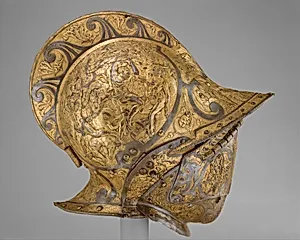
Medium
Steel, gold
Dimensions
H. 8 7/8 in. (22.5 cm); W. 7 1/4 in. (18.4 cm); D. 4 3/4 in. (12.1 cm); Wt. without burgonet 1 lb. 2 oz. (499 g)
Classification
Helmets Parts
Culture
French
Department
Arms and Armor
Museum
Metropolitan Museum of Art, New York, NY
Credit
Purchase, Joseph Pulitzer Bequest, 1922
Accession Number
22.140
Rights
Public Domain
Tags
Art Historical Context
Step into the world of Renaissance warfare with the *Buffe*, a masterful piece of French armor crafted around 1550. This detachable lower face guard, designed to pair with a burgonet helmet, measures a compact 8⅞ inches high and weighs just over a pound without the helm. Forged from steel and adorned with gold—likely through gilding or damascening—it protected the wearer's chin and jaw during fierce combats or tournaments, allowing for ventilation while shielding vital areas. In mid-16th-century France, amid the Italian Wars and evolving military tactics, such armor balanced functionality with opulence. The buffe's intricate motifs, evoking battles, men, and mythical centaurs, reflect the era's fascination with classical antiquity and heroic epics. These etched or embossed decorations not only intimidated foes but also signified the status of elite knights or nobility, turning protection into personal artistry. Today, at The Metropolitan Museum of Art (acquired via the Joseph Pulitzer Bequest in 1922), this rare helmet component highlights the pinnacle of armorer's craft: lightweight yet robust steel tempered for resilience, enhanced by luxurious gold accents. It invites us to ponder the human drama behind the metal—the clash of swords, the thunder of hooves, and the blend of myth and mortality on the battlefield.