
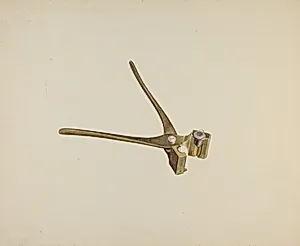
Bullet Mold
c. 1942
Medium
watercolor and graphite on paper
Classification
Index of American Design
Department
CG-W
Museum
National Gallery of Art, Washington, D.C.
Credit
Index of American Design
Accession Number
1943.8.12629
Rights
Public Domain
Art Historical Context
Behold the intricate *Bullet Mold* by Stanley Mazur, a and graphite rendering on paper created around 1942. This artwork is a gem from the Index of American Design, a New Deal-era project under the Works Progress Administration (WPA From 1935 to 1942, artists across the U.S. meticulously documented everyday objects that embodied American craftsmanship, preserving cultural heritage through detailed illustrations amid the Great Depression. Mazur's precise technique captures the functional beauty of this colonial-era tool, used for casting lead bullets by hand—a vital piece of early American ingenuity and self-reliance. The combination of soft watercolor washes and sharp graphite lines highlights the mold's metallic sheen and practical form, showcasing the IAD's emphasis on realism and historical accuracy. Housed in the National Gallery of Art's collection, it reflects how ordinary implements like this told stories of frontier life and wartime necessity. Today, *Bullet Mold* invites us to appreciate the unsung artistry in America's past, bridging craft, history, and the artists who revived it during tough times. A reminder that design thrives in the details!
About the Artist
Stanley Mazur · 1903–1978
**Stanley Mazur (1903–1978)** was an American artist best known for his meticulous watercolor renderings created as part of the Index of American Design, a Works Progress Administration (WPA) initiative during the Great Depression era. This ambitious project commissioned artists across the United States to document everyday folk art objects, crafts, and tools that embodied the nation's cultural he...